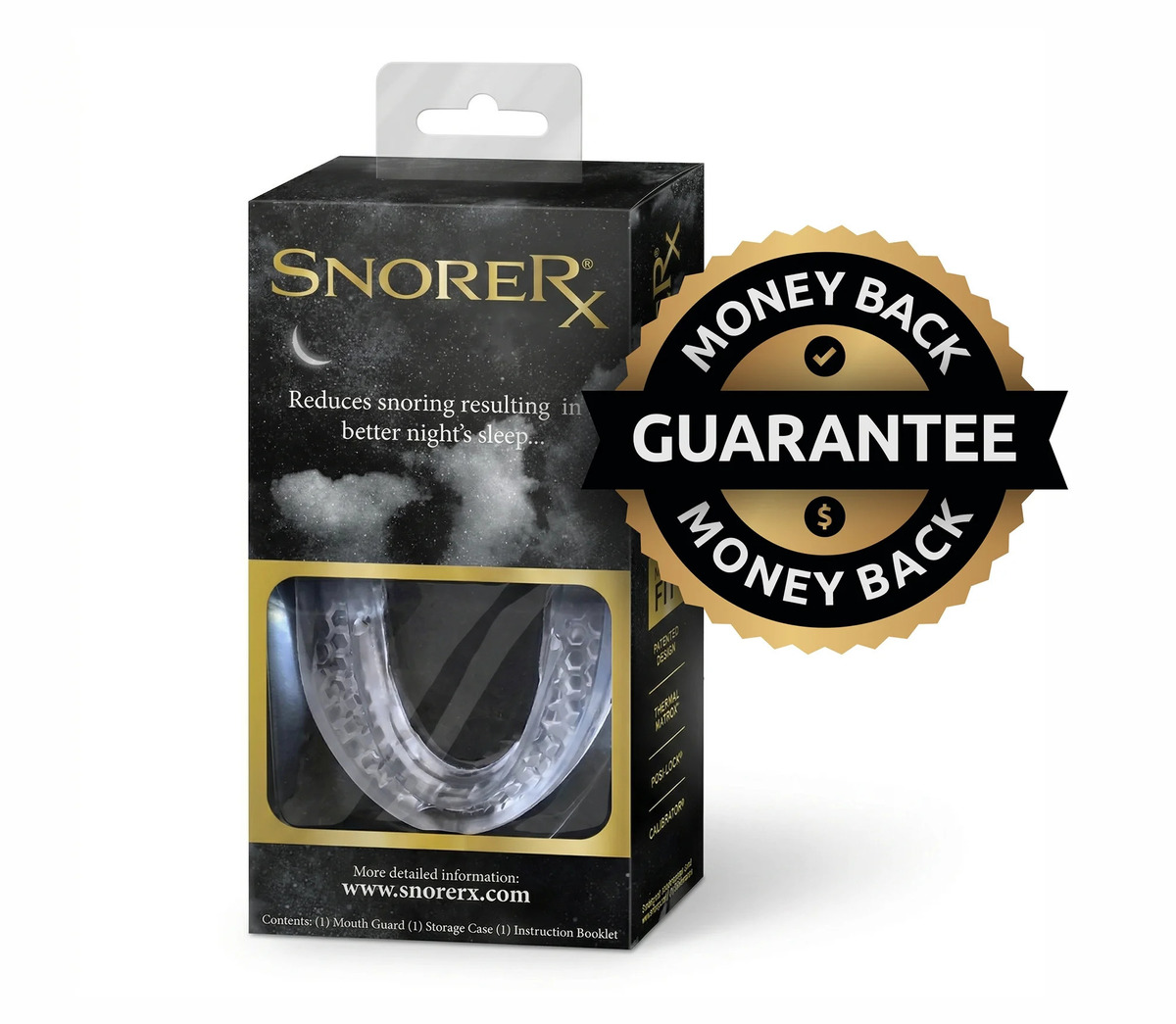

SnoreRx
New York
SnoreRx Review for People Who Grind Teeth: Does It Double as Night Guard?
Waking up exhausted because you or your partner spent the entire night snoring is a massive problem. Add teeth grinding—clinically known as bruxism—into the mix, and you are dealing with sore jaws, damaged enamel, and a seriously compromised quality of life. Finding a practical fix usually means buying multiple expensive devices. You might get a specialized anti-snoring mouthpiece from one company and a heavy-duty night guard from your dentist. Managing both is annoying, costly, and impossible to wear simultaneously.
When I started looking for a single solution to handle both airway blockages and nighttime grinding, I needed something functional and effective. SnoreRx immediately caught my eye. The manufacturer positions it as a premier anti-snoring mouthpiece, boasting FDA clearance and doctor recommendations. It relies on moving the lower jaw forward to clear the airway.
But looking at its thick thermal matrix material and custom boil-and-bite design, a very practical question arose. Can this one device truly address both issues effectively? Can it act as a reliable barrier for teeth grinders while still silencing the snores?
If you want to skip the detailed breakdown and check the current pricing or availability, click here to see the latest SnoreRx deals.
Understanding SnoreRx: How it Works for Snoring
Before evaluating its secondary potential for bruxism, we need to understand exactly how SnoreRx tackles its primary job. SnoreRx falls into a category of devices known as mandibular advancement devices (MADs).
The root cause of most snoring is actually quite simple. When you fall asleep, your body relaxes. For many people, this causes the jaw to fall back, which subsequently allows the soft tissue at the back of the throat to collapse into the airway. As air struggles to push past this obstruction, the tissue vibrates. That vibration is the snoring sound keeping your house awake.
SnoreRx acts as a physical intervention. By gently advancing your lower jaw forward, it naturally widens your airway. This prevents the soft tissue from collapsing and effectively stops the vibration at the source.
The device relies on a few core features to make this happen comfortably. First, it features a thermal matrix material that allows for a custom mold to your specific teeth. Second, it includes a micro-adjustment mechanism. Unlike cheap, rigid mouthpieces, SnoreRx allows you to adjust the jaw advancement precisely to fit your unique anatomy. This ensures you aren't forcing your jaw into an overly aggressive position, which is a common complaint with inferior devices.
The Teeth Grinding Dilemma: Bruxism Explained
To determine if SnoreRx can double as a night guard, we have to look closely at bruxism. Teeth grinding and clenching often happen subconsciously during sleep. It is frequently linked to stress, anxiety, or even sleep apnea. The consequences of unchecked bruxism are severe. It wears down tooth enamel, causes receding gums, leads to cracked teeth, and generates intense jaw and headache pain.
Traditional night guards are designed strictly as protective barriers. They do not move your jaw forward. Instead, they provide a durable cushion of plastic or acrylic between your upper and lower teeth. When you bear down in your sleep, you grind against the guard instead of destroying your actual teeth.
SnoreRx as a Night Guard: An In-Depth Look
Can the construction of SnoreRx withstand the immense pressure of teeth grinding? Let's analyze the design.
Because SnoreRx is an oral appliance that sits between the upper and lower teeth, it absolutely creates a physical barrier. The dental lab-quality thermal matrix material used for the impression is thick and durable. When you bite down with the device in your mouth, your upper and lower teeth cannot touch. In a strictly mechanical sense, it prevents bone-on-bone grinding.
The custom fit plays a huge role here. Because you use a boil-and-bite method to map the device exactly to your dental profile, the force of any clenching is distributed evenly across the appliance. This is vastly superior to one-size-fits-all mouthguards, which can cause localized pressure points and actually worsen jaw pain.
However, we have to be realistic about the materials. SnoreRx is engineered to hold a jaw position, not necessarily to absorb the high-friction lateral grinding of severe bruxism over a long period. While it undeniably offers a protective barrier, the soft thermal material may wear down faster than the hardened acrylic used in severe bruxism guards provided by dentists.
To see if this dual-purpose approach fits your budget and needs, check out SnoreRx's official website for current promotions.
Personal Experience and Observations
I approach any sleep device with a focus on practicality and usability. The setup process for SnoreRx is straightforward, utilizing a standard thermal boil-and-bite method. You drop the device in boiling water for a precise amount of time, let it cool for a second, and then bite down firmly to create the impression.
The molding process was fairly simple, and the device retained the impression perfectly. My initial observation upon wearing it was the bulk. Because it includes the micro-adjustment tracks and enough material to hold both sets of teeth, it takes up noticeable space in the mouth.
For snoring, the results align with the manufacturer's claims. By dialing in the adjustment just a few millimeters forward, the airway clears up efficiently. The reduction in snoring volume is highly noticeable.
Regarding teeth grinding, the experience is interesting. Because your jaw is locked into a forward position, the natural mechanics of how you normally grind are interrupted. I found that the device not only acted as a barrier but actively discouraged the sliding motion of grinding because the upper and lower trays are engaged with the adjustment mechanism. You simply cannot slide your jaw side-to-side easily while wearing it. It provided a thick, protective cushion that left my teeth feeling completely protected upon waking.
Pros and Cons of Using SnoreRx for Both Conditions
Whenever you try to solve two problems with one tool, there are trade-offs. Here is a practical breakdown of what works and what doesn't.
Pros
The biggest advantage is the potential for a single-device solution. Spending $49.99 on SnoreRx is drastically more affordable than buying a separate snoring mouthpiece and a custom dental night guard. The custom boil-and-bite fit ensures the barrier is comfortable and tailored to your teeth, which is essential for any bite guard. Additionally, the open-front design allows you to breathe through your mouth and even drink water without removing the device.
Cons
The main drawback is durability for heavy grinders. If you clench and grind with extreme force, you will chew through the thermal matrix material much faster than a standard user. Furthermore, advancing the jaw forward can cause initial jaw soreness. If you already suffer from temporomandibular joint (TMJ) pain due to grinding, pushing the jaw forward might temporarily exacerbate that muscle tension until you get used to it.
If you are ready to tackle your sleep disruptions, you can order SnoreRx directly from the manufacturer here.
Who is SnoreRx For?
From a problem-solving perspective, SnoreRx is an excellent fit for individuals dealing with mild to moderate snoring who also suffer from occasional, light teeth grinding. If you occasionally wake up with a sore jaw from stress-induced clenching, the barrier provided by this mouthpiece will likely be more than sufficient to protect your teeth while simultaneously silencing your snoring. It is perfect for the practical shopper looking for a convenient, multi-purpose device that is easy to mold at home.
Who Might SnoreRx Not Be Ideal For?
We have to be transparent about limitations. SnoreRx is not a miracle cure for everyone. Individuals with severe, chronic bruxism should be cautious. The intense pressure may degrade the device quickly. Furthermore, if you have diagnosed TMJ disorders, moving the jaw forward is generally not recommended without a doctor's supervision.
Additionally, the manufacturer notes specific dental contraindications. People with braces, loose crowns, or those missing multiple teeth will not be able to get a secure, safe mold with the boil-and-bite material. If you need a heavy-duty, indestructible night guard, you will still need to consult a dentist.
Think this device matches your specific sleep profile? Secure your SnoreRx mouthpiece today and improve your rest.
Maintenance and Longevity
Taking care of an oral appliance is critical if you want it to last, especially if you are subjecting it to the stress of nighttime clenching. SnoreRx is quite easy to clean. The manufacturer recommends cleaning it daily using a toothbrush and toothpaste, or using a specialized denture cleaner to keep bacteria at bay.
The expected lifespan of a SnoreRx device is typically between 9 to 11 months under normal use. However, if you are relying on it as a dual-purpose device for bruxism, you should expect that lifespan to decrease. Heavy clenching will wear out the thermal matrix material faster. You might find yourself needing a replacement closer to the 6-month mark. Given the price point, replacing it a bit more frequently is still highly economical compared to custom dental alternatives.
Comparison with Dedicated Night Guards
When evaluating SnoreRx against dedicated bruxism guards, the primary difference is the intended mechanism of action. A dedicated night guard usually has a flat bite plane. It allows your jaw to slide naturally while protecting the teeth. It does nothing for snoring.
SnoreRx restricts that sliding movement by holding the jaw forward to open the airway. The material is also generally thicker to accommodate the adjustment hardware. A premium dental guard will be sleeker and made of harder materials specifically formulated to withstand years of grinding friction, whereas SnoreRx uses softer materials designed for comfort and impression retention.
Making an Informed Decision
Does SnoreRx successfully double as a night guard? The practical answer is yes, with realistic expectations. It undeniably creates a thick, custom-molded physical barrier between your upper and lower teeth, which completely prevents bone-on-bone grinding. Furthermore, by locking the jaw in a forward position, it restricts the lateral movement required for severe grinding.
However, you must remember its primary function is to stop snoring by advancing the jaw. The teeth protection is an incredibly beneficial secondary perk, not its main engineering focus.
If you are a severe grinder with complex dental issues, you need a specialized tool from a dentist. But if you are a moderate snorer who occasionally clenches your teeth and you want an affordable, FDA-cleared solution to handle both problems efficiently, this device is a highly practical investment. It solves the core problem of airway obstruction while giving your teeth the nightly cushion they desperately need.
To take control of your sleep and try this dual-purpose solution yourself, visit the official SnoreRx store here.